Photo feature · The two Arctic buildings
Two addresses. One meshed record.
Volume IV identifies two distinct locations and argues that merging them compressed the evening’s sequence.
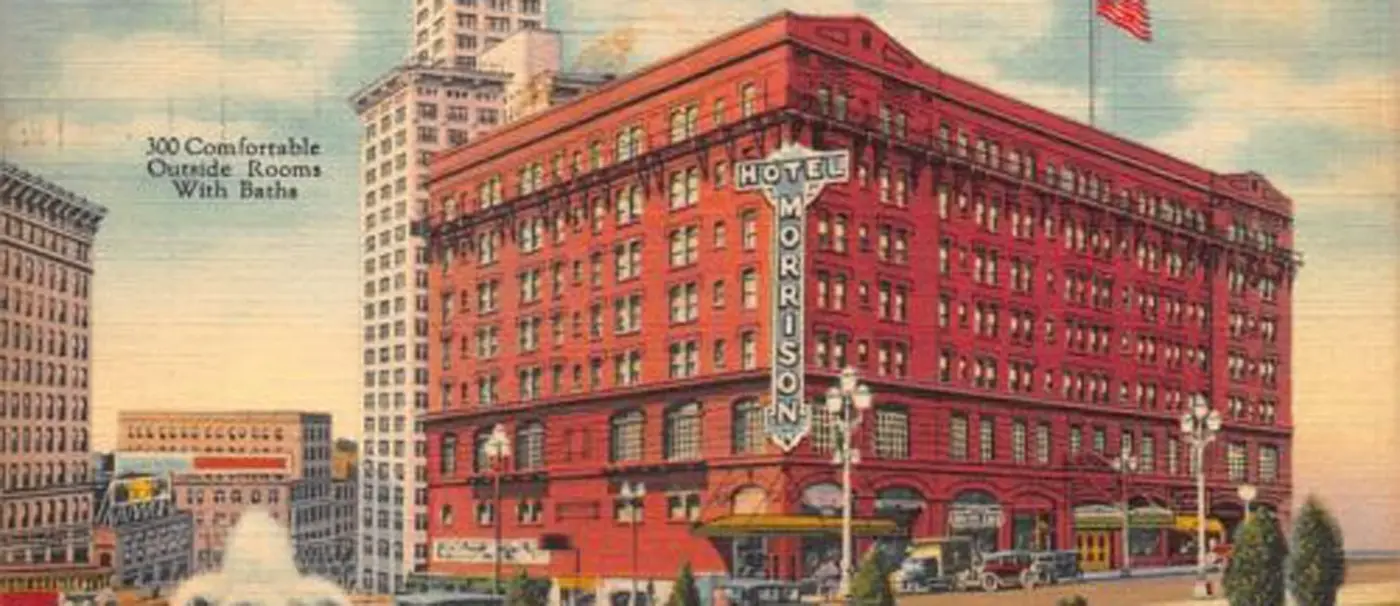
Old Arctic Club / Morrison Hotel
501 3rd Ave · Vic’s Alaskan Cigar Store · postcard c. 1942
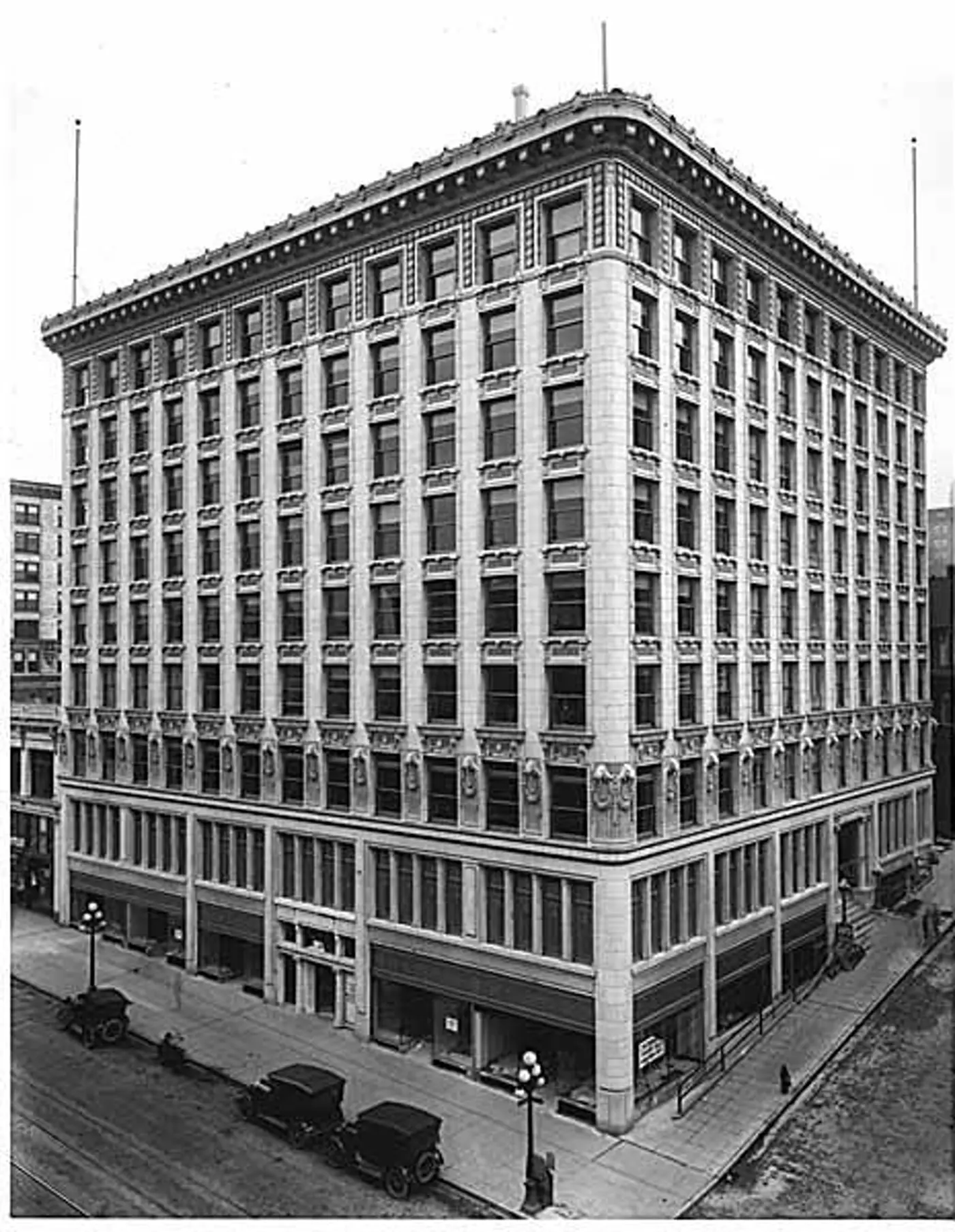
New Arctic Building
3rd Ave & Cherry St · Zioncheck’s 5th-floor office · ca. 1917
Volume IV: press and police meshed these two distinct buildings. Vic was in the old building; Marion’s office was in the new.
Inquiry of the Record · No. 14
How and why did the record get meshed between the old Arctic building at 501 3rd Avenue and the new Arctic building at 3rd Avenue and Cherry Street?
Volume IV identifies two distinct locations: the old Arctic Club / Morrison Hotel at 501 3rd Avenue, associated with Vic’s Alaskan Cigar Store, and the newer Arctic Building at 3rd Avenue and Cherry Street, where Marion’s fifth-floor office was located. The volume argues that merging those locations moved the final conversation into the death-scene building and compressed the sequence into a spontaneous-jump narrative.
Building locations and analysis · Volume IV, PDF p. 13 ↗
Inquiry of the Record · No. 17
Why was cousin “Vic” in the area to witness at all if he worked in another building — and why do minimal records of Vic or his cigar shop exist today?
The volumes place Vic’s workplace — the Alaskan Cigar Store — in the old Arctic Club / Morrison Hotel at 501 3rd Avenue, and Marion’s fifth-floor office in the newer Arctic Building at 3rd Avenue and Cherry Street. Volume V identifies him as Victor Anthony / Antoni Zajaczek, Marion’s maternal cousin, and describes him leaving the cigar store late on August 7, 1936, and encountering the events around Marion’s body. Read with Volume IV’s two-building chapter, that account makes his route part of the evening’s sequence, and treats the press-and-police merge of the two addresses as isolating an unplanned witness.
The record raises a tighter set of questions from that split. If Vic’s shop was the old Arctic and Marion’s office was the new one, why is Vic in the death-building sequence at all — close enough that Volume V can treat him as the unplanned witness who, in its account, saw the body being positioned, knew Nadeau, was threatened, and stayed silent? A man who worked at 501 3rd Avenue would have known the two addresses were not the same. The inquiry asks why any later telling would put him in a position to speak to what happened in Marion’s office, and whether a meshed two-building story misstates what he could have seen. Volume V does not print a Vic statement fabricating Marion’s words. It prints silence after a threat, then an archival void.
One open possibility the two-building chapters leave on the table, not as a finding: that Marion called his cousin there for protection, and that Vic failed. The volumes do not print that call, and they do not print a verdict that Vic failed anyone. They place a cousin from the other Arctic on the scene and then erase his paper trail. Why he was there, and what he did or did not do, remains the inquiry.
The same Volume V chapter then lists a complete archival void after that date: no marriage record, death certificate, obituary, census entry, business record, or further newspaper or directory mention. Volume IV’s recommendations ask for Seattle city directories of 1935–1938 at 501 3rd Avenue and King County business-license records of 1935–1937 to identify who took over the Alaskan Cigar Store lease after August 1936. The volumes record the absence. They do not supply a later paper trail for Vic or the shop.
Two Arctic locations · Volume IV, PDF p. 13 ↗
Vic’s erasure · Volume V, PDF p. 5 ↗
Directory and license requests · Volume IV, PDF p. 15 ↗
Inquiry of the Record · No. 01
Why was Marion sent from Washington, D.C. to Seattle, Washington?
William Bishop, Capitol police
Aziel’s caption on a Library of Congress still (LCCN 2016878217). Volume II names Romney and Capitol police; it does not print Bishop’s name.
The contemporary account reproduced in Volume II describes Kenneth Romney, the House sergeant-at-arms, arranging safe conduct back to Seattle after Marion’s escape from the Maryland institution. It says Capitol police intervened to prevent another arrest, and that Marion ultimately traveled west by train after an airline refused him passage in Chicago. The report connects the return with his mother in Seattle and Romney’s assistance during his difficulties.
The plate is Aziel’s identification of William Bishop, Capitol police, in the escort still. The volumes do not name Bishop. The Library of Congress record remains LCCN 2016878217; Wikimedia’s file is the untitled Commons upload of that scan.
Volume II · PDF p. 5 ↗
Inquiry of the Record · No. 02
Why do archive records conflict with the official narrative online today?
The archive preserves the details that the investigation compares: differing descriptions of the last movements, the photographed note, the room arrangement, and the two Arctic locations. Volume IV places those details alongside the account of a sudden fifth-floor jump. Reading the records together brings the wording, physical setting, and sequence of events into the same frame.
The official narrative, as the papers printed it ↗
Volume I · PDF p. 18 ↗
Volume II · PDF p. 13 ↗
Volume IV · PDF pp. 5–13 ↗
Inquiry of the Record · No. 03
Why was Marion trying to stay in the media and spotlight?
The August 8 report in Volume II says Marion re-entered the congressional race to show the public he was neither crazy nor foolish. That explanation makes public appearances part of his response to the image attached to him. The archive also preserves headlines centered on his behavior, while Volume V discusses his planned political speech and conflict with powerful institutions.
Volume II · PDF p. 4 ↗
Volume V · PDF pp. 9–11 ↗
Inquiry of the Record · No. 04
What can photographs establish?
Photographs document visible objects and their positions at the time of exposure. Volume IV examines Nadeau’s position in the doorway and the placement of Marion’s hat and coat on the floor. It compares that arrangement with the account of Nadeau reaching for the hat as Marion moved toward the window.
Volume IV · PDF p. 11 ↗
Inquiry of the Record · No. 05
Why does Nadeau’s account not match the setup of Zioncheck’s office — and why did his account change?
The office, as the press printed it
Desk shown as the congressman left it — Volume II, PDF p. 3 · Open in the reader
Volume IV records William Nadeau’s official-narrative claims: he stood “one foot away”; Zioncheck “ran around the desk,” “brushed past” him, and “dove headfirst” through the open window in one fluid motion. The same volume measures that sequence against a small, cluttered fifth-floor office — a usable run of 4–6.5 meters, a sash opening of 27–33 inches, and a minimum 2.7–3.8 seconds — and calls the proximity claim physically impossible.
Chapter 8 then sets those statements beside the official death-scene photograph: Nadeau calm in the doorway; hat and coat already arranged on the floor — contradicting the story that he was “reaching for the hat” when Zioncheck jumped. Volume I’s writing account, that Nadeau found Marion writing shortly before the reported jump, belongs in the same frame. The volumes present contradictory statements and a staged-looking plate. They do not print a later signed retraction. Volume II prints the empty office — desk, window, bookcase — under a caption that the farewell message was written there and the desk shown as the congressman left it. Volume IV discusses a WSU doorway plate the supplied PDFs do not reproduce as a standalone image.
Office plate · Volume II, PDF p. 3 ↗
Nadeau’s claims · Volume IV, PDF p. 5 ↗
Staged-photograph chapter · Volume IV, PDF p. 11 ↗
Writing account · Volume I, PDF p. 18 ↗
Inquiry of the Record · No. 06
Where are records to his “Who’s Crazy Now” speech?
Speech announcement
Supplied clipping · “‘Who’s Crazy?’ Will Be Topic For Zioncheck” · cropped from a WSU Libraries sheetshot · not a volume-page facsimile
The supplied plate is a contemporary announcement headed “‘Who’s Crazy?’ Will Be Topic For Zioncheck.” As printed, Congressman Marion A. Zioncheck will speak at 8 o’clock Monday night in the Civic Auditorium; Rev. Fred W. Shorter, chairman of the People’s Forum, is named as sponsor. The same paragraph says it will be the Seattle congressman’s first appearance at a public meeting since his return after the escape from a Maryland hospital. Volume II’s race-return clippings supply the surrounding public context. The collection still does not include a full transcript under the title “Who’s Crazy Now.”
Volume II · PDF p. 4 ↗
Inquiry of the Record · No. 07
Why did Marion dress up for a speech — then decide to “jump”?
Volume V describes Marion’s commitment to speaking at the postal workers’ dinner that evening. The investigation places that planned appearance beside the reported sudden jump: he had an audience, an engagement, and a purpose for the evening. The chapter discusses the speech preparations as part of the sequence leading to the Arctic Building.
Volume V · PDF p. 9 ↗
Inquiry of the Record · No. 08
Why did his wife never give a statement as the most prolific witness?
The contemporary report in Volume II places Rubye in the car just feet from where Marion’s body landed, then describes her collapse and removal to a hospital. Its account of her experience is narrated by the report rather than presented as a detailed first-person statement from her. Volume V makes her proximity, subsequent actions, and relationship with the Nadeaus central to its discussion of the human evidence.
Volume II · PDF p. 4 ↗
Volume V · PDF p. 8 ↗
Inquiry of the Record · No. 09
Why did Rubye hide testimony in her art for a later generation to find?
Volume V states that Rubye fled, changed her name, and “encoded the truth in her artistic work.” Chapter 10, headed Rubye Nix Wilson artistic testimony, transcribes four high-priority works, including “I could not remain silent forever,” “I was with him when it happened. It wasn’t what we were told,” and “THERE IS MORE.” The volume reads those plates as direct statements of presence and of the falsity of the official account, and it recommends multispectral analysis of matching works. It does not print a contemporaneous statement from Rubye that she hid testimony for a later generation; that framing is the open inquiry. The facsimiles sit on the Rubye paper and in Volumes I and V.
Artistic testimony · Volume V, PDF p. 13 ↗
Flight and encoded work · Volume V, PDF p. 8 ↗
Rubye paper · the art plates ↗
Inquiry of the Record · No. 10
Why did Rubye relentlessly sue the Nadeaus after? Was it spite, or was she silenced too?
Volume II preserves the family-battle clippings: “Kin Fight Over Zioncheck Will,” naming Mrs. Ann Nadeau and Mrs. Rubye Nix Zioncheck; “Zioncheck Daughters Fight Over Estate”; “Nurse Defends Zioncheck Will”; and “Zioncheck’s Widow Must Yield Stocks.” Those plates put Rubye and the Nadeaus as opposing names in probate and estate columns. Volume V states that she later engaged in repeated legal actions against Nadeau over property and estate matters, and that she expressed intense hatred of the Nadeaus — language the volume treats as consistent with someone who knew the truth and refused to play along. The same chapter records a Hollywood offer or payoff tied to the Nadeau orbit, which it says she intentionally flopped.
The volumes print the lawsuits and that reading. They do not settle whether the suits were spite, a silenced witness’s only remaining instrument, or both. That tension is the open inquiry. The facsimiles are gathered on the Rubye paper .
Kin fight the will · Volume II, PDF p. 19 ↗
Nurse defends the will · Volume II, PDF p. 16 ↗
Widow must yield stocks · Volume II, PDF p. 17 ↗
Later actions against Nadeau · Volume V, PDF p. 8 ↗
Rubye paper · the lawsuit plates ↗
Inquiry of the Record · No. 11
Why are the injuries inconsistent with a five-story fall?
Marion A. Zioncheck — Certificate of Death
Washington State Board of Health · Aug. 7, 1936 · sidewalk in front of the Arctic Building · not Frances Zioncheck’s certificate
Volume IV argues that the described injury distribution fits ground-level restraint and blunt-force trauma more closely than the reported head-first fall. Its comparison focuses on cranial trauma, the neck, the limbs, and the broader pattern of injuries it expects from a fall of that height. This is the injury-pattern argument developed in the physics volume.
Volume IV · PDF p. 10 ↗
Inquiry of the Record · No. 12
Why were so few witnesses named — and why was one of them the person who broke the story?
Volume V places Sol Krems in two roles: a named witness at the scene and the newspaper figure it credits with the first story. It contrasts that named role with references to scores of unnamed witnesses. The chapter follows the overlap between the sidewalk account and the narrative that reached readers the next morning.
Volume V · PDF p. 6 ↗
Inquiry of the Record · No. 13
Why was the janitor unnamed — and why would he have walked away during the event?
Volume IV’s phantom-janitor chapter states that the official narrative relies on a janitor who allegedly unlocked the office door after the reported jump, and that no janitor matching that role appears in contemporary records with a verifiable name — no Arctic Building employment list, police report, or witness statement supplies a consistent one. The volume treats the locked-door detail as a device that lets the named participants avoid explaining access. Volume V repeats the finding: there was no real janitor matching the described role. The volumes do not record a named man leaving the scene mid-event. Why such a figure would walk away remains open because the archive never identifies him.
The phantom janitor · Volume IV, PDF p. 12 ↗
Named participants · Volume V, PDF p. 12 ↗
Inquiry of the Record · No. 15
Where are his dinner-party speech papers?
Volume V describes Marion returning to the Arctic Building with part of a speech or letter missing and identifies House stationery in its account of that writing. The dinner speech papers concern what he intended to say to the postal workers’ audience. Their content and disposition are central to the chapter’s account of his preparations that evening.
Volume V · PDF p. 9 ↗
Inquiry of the Record · No. 16
Why does his “suicide note” read like part of a speech — and why was it folded if he had just written it?
Volume II reproduces the handwritten note on House of Representatives stationery, with visible horizontal and vertical creases. Its text concerns an unfair economic system and the chance to survive and live. That political language connects this entry to the dinner speech discussed in Volume V. The photographed paper and its creases also belong beside the account in Volume I that Nadeau found Marion writing shortly before the reported jump.
Photographed note · Volume II, PDF p. 13 ↗
Writing account · Volume I, PDF p. 18 ↗
Speech discussion · Volume V, PDF p. 9 ↗
Inquiry of the Record · No. 18
Does Marion’s work and background — from Naval Intelligence to fighting the Alaskan Highway Bill and being backed to establish a third political party — play a role?
Volume V brings the naval-intelligence background it describes, third-party plans, federal-surveillance interests, and Alaska Highway legislation into its account of political motive. It presents those subjects alongside Marion’s intended dinner speech and the removal of his remarks from the Congressional Record. The volume’s explanation treats his political work and institutional conflicts as central to the case.
Volume V · PDF pp. 9–11 ↗
Inquiry of the Record · No. 19
Is it a coincidence that Illinois statesman John Bolton died suspiciously less than one month before?
Volume III includes a biographical account of Illinois legislator John M. Bolton’s killing in Chicago on July 9, 1936, following a car chase. That date is 29 days before Marion’s death on August 7. The reproduced material describes contemporary reporting about organized crime, political interests, and competing explanations for Bolton’s killing. The archive places this episode alongside the Zioncheck research as a comparison from the same period.
Bolton material · Volume III, PDF pp. 3–4 ↗
Inquiry of the Record · No. 20
Why are most of Nadeau’s records missing? Was he naval intelligence too?
Volume V states that both Macfarlan and Nadeau have almost no records — language it treats as consistent with intelligence ties in a Seattle Navy-intelligence era — and, in the named-participants chapter, that Nadeau’s “intelligence ties (explains lack of records).” The same volume documents Marion’s naval-intelligence background separately. The supplied PDFs do not contain Nadeau service papers, a naval-intelligence file, or a FOIA production on Nadeau. The gap is what the volumes record; they do not prove a naval-intelligence posting. Volume IV’s FOIA recommendations target surveillance files on Zioncheck, not a named Nadeau dossier.
Macfarlan and Nadeau records · Volume V, PDF p. 7 ↗
Named participants · Volume V, PDF p. 12 ↗
Federal-records requests · Volume IV, PDF p. 15 ↗
Inquiry of the Record · No. 21
Why are FOIA requests on Marion denied to this day?
FBI FOIPA closing
Supplied letter · 31 July 2026 · Request No. 1750194-000 · CRS search closed · requester identity and agency contacts redacted · Full packet on the FOIA paper
The federal-records discussion in Volume IV calls for FOIA and archival requests concerning surveillance or monitoring of Marion during 1935–1936, tied to his institutional conflicts and interest in federal operations. Volume V also calls for access to federal surveillance files. A supplied FBI FOIPA letter dated 31 July 2026 — Request No. 1750194-000 as printed on the plate — closes a Central Records System search: the Bureau states it was unable to identify records on Marion Anthony Zioncheck for the stated 1930–1950 window, and that the request is being closed. Requester identity and agency contact blocks are blacked out on the plate. A no-records closing is not a production of the files the volumes ask for.
The request packet · FOIA paper ↗
Federal-records requests · Volume IV, PDF p. 15 ↗
Federal-files recommendation · Volume V, PDF p. 14 ↗
Inquiry of the Record · No. 22
Why was Marion’s mother never informed of his death — and is this why she died of Involutional Melancholia?
The supplied Marion certificate lists the informant as Mrs. Wm. Nadeau, not Frances. Volume II later names Mrs. Frances Zioncheck in the estate columns as the late congressman’s mother. Volume III preserves her own death certificate; the principal cause as written is Involutional Melancholia, with contributory exhaustion / myocarditis as that plate records them. The volumes do not print a telegram, hospital notice, or other instrument showing that she was told of the August 7, 1936 death, and they do not print a statement that she was never told. Whether she was informed, and whether that silence belongs beside the cause as written, remains an open inquiry.
Marion’s certificate · Volume III, PDF p. 6 ↗
Frances’s certificate · Volume III, PDF p. 5 ↗
Estate columns naming Frances · Volume II, PDF p. 15 ↗
Inquiry of the Record · No. 23
Was Marion Zioncheck a threat to the establishment that couldn’t be silenced?
Volume V’s prelude chapter rejects the unstable-playboy reading. It calls him a threat to powerful interests who was preparing to expose sensitive operations, and it sets that claim beside third-party plans, G-Men / federal-surveillance interest, a naval-intelligence background, and the Alaska Highway legislation (H.R. 6538). The institutional-sanitization chapter then records House votes in mid-April 1935 (272–0) and February 1936 (~274–0) that expunged his remarks from the Congressional Record, and treats those expungements as a pattern of hostility before the death. Volume I’s opening press sheet — the crop on this page — places J. Edgar Hoover in the contemporary columns beside a “playboy legislator” arrest report; the supplied “Playboy Subdued After Battle” plate is the apartment-row photograph that circulated with that framing. Volume II’s death-day headlines continue it. The bogeyman composite shows him trying on a disguise as the “bogeyman of Washington politics.” The volumes argue he was treated as a threat and silenced before the dinner speech. They do not print an order from every institution named on these plates.
Prelude and motive · Volume V, PDF pp. 9–10 ↗
Record expungements · Volume V, PDF p. 11 ↗
Hoover-era press sheet · Volume I, PDF p. 3 ↗
Playboy headline · Volume II, PDF p. 4 ↗